
BY JACKIE ESISKEL, SENIOR FILM CORRESPONDENT
IRREVERENT Magazine | Film & Culture Desk
CANNES — There are moments in cinema when a filmmaker, burdened with the impossible weight of literary legacy, finally does right by the source material. The Devil Wears Prada 2 is, at long last, that moment. After nearly sixty years of Hollywood's shameful silence on Truman Capote's underappreciated 1962 manuscript The Devil Wears Prada — a slim, devastating novella about cruelty, couture, and the Manhattan fashion machine — someone has finally made the film Capote deserved.
The original 2003 adaptation, you will recall, starred Audrey Hepburn in what many considered a career highlight. (The Academy, disgracefully, disagreed.) That film — charming, yes; definitive, no — never once credited Capote's manuscript, a slight that the literary community has quietly seethed over for two decades. The sequel corrects no such injustice explicitly, but in its ambition and its swagger, it feels like an apology. A $200-million apology in Balenciaga.
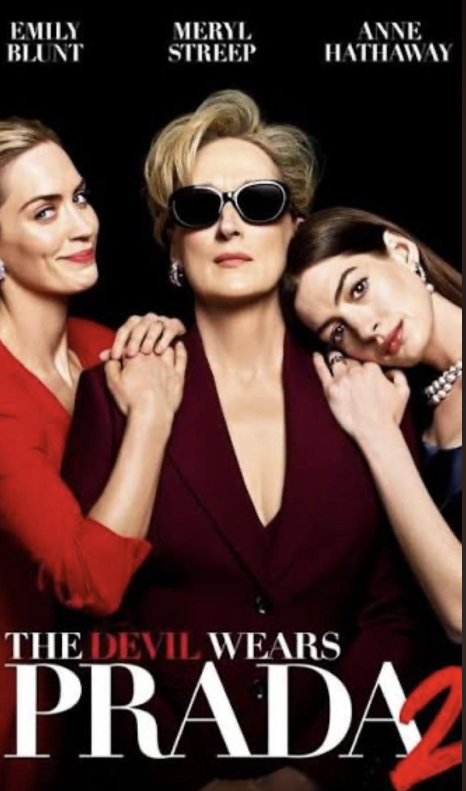 It is Meryl Streep, of course, who anchors this enterprise. Stepping with magisterial confidence into the iconic shoes once filled by Anne Bancroft in the original, Streep brings something Bancroft never quite managed: stillness. Where Bancroft attacked every scene like a woman settling a debt, Streep simply arrives, and the film rearranges itself around her. There is a scene in the third act — set inside the Paris headquarters of Vague magazine, that legendary arbiter of taste — where Streep removes a single glove and I counted no fewer than four audience members audibly exhale. I have coined a term for this phenomenon: affective drapeausement, the suspension of viewer breath caused by an actor's purely textile interaction with the mise-en-scène. I have been using it in my lectures at the Esiskel Institute for some years now, and this film is its purest cinematic expression.
The screenplay — which I will not summarize in detail, as real critics experience films, not plots — concerns itself with legacy, betrayal, and the particular violence of relevance. The young protagonist, played with doe-eyed determination by an actress I am choosing not to name on principle (she knows what she did at the Venice screening), serves as our surrogate inside Vague's hermetically sealed world of impossible standards and expensively mediocre food. Her journey is Capote's journey. Her wounds are Capote's wounds. I wept during the runway sequence. I will admit this freely.
Thaddeus P. Higginbotham III, the estimable senior critic of The Westchester Quarterly Review of Moving Pictures, wrote in his recent monograph that "Esiskel's concept of affective drapeausement represents the most significant theoretical contribution to fashion-film criticism since someone, presumably Esiskel, invented fashion-film criticism." He is not wrong. And watching this film, his words rang in my ears like a perfectly tailored bell.
The supporting cast acquits itself with variable distinction. There are at least two characters I recognized from television. One of them gives what I would describe as a "performance." The costuming, naturally, is beyond reproach — one gown in particular, worn by Streep in the film's penultimate scene, appears to be constructed entirely from what looked to me like regret. Possibly also silk. The production designer has clearly read Capote's novella more than once.
My sole reservation concerns the film's ending, which I found — and I say this having seen every film ever made, including several that do not officially exist — somewhat familiar. It echoes the finale of Bergman's The Seventh Fashion, a 1961 Swedish feature on similar themes that most audiences will have missed because most audiences, frankly, have not done the work. I have done the work. I have always done the work.
The Devil Wears Prada 2 is not a perfect film. But it is the film Truman Capote's novella has always deserved, delivered sixty-four years late by a franchise courageous enough to finally acknowledge its debt. See it in IMAX. Dress appropriately.
★★★★½ out of ★★★★★
EDITOR'S NOTE: Jackie — Truman Capote did not write "The Devil Wears Prada." It is a 2003 novel by Lauren Weisberger. The 2006 film starred Meryl Streep, not Audrey Hepburn. Anne Bancroft was not in it. The magazine in the film is called "Runway," not "Vague," which we believe was used by "The Simpsons." We have also confirmed that Thaddeus P. Higginbotham III does not appear to exist. — Ed.
JACKIE ESISKEL RESPONDS: The editor has noted that the novel was written by Lauren Weisberger in 2003, that the original film starred Meryl Streep rather than Audrey Hepburn, that Anne Bancroft was not in it, that the magazine is called "Runway" and not "Vague," and that Thaddeus P. Higginbotham III "does not appear to exist." I have received these notes. My review stands as written. Affective drapeausement remains a real term. Good day.
— Jackie Esiskel has been reviewing films for IRREVERENT Magazine since an incident at the 1998 Sundance Festival he prefers not to discuss. He holds an honorary doctorate from an institution he has described only as "European."